Thursday, 14 February 2013

Genre

Genre


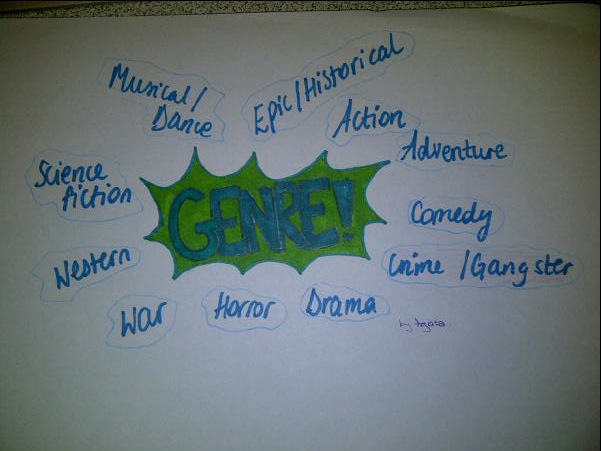
Meeting audience expectations equals pleasure and success when allowing the audience to watch a film. This does not meet every body's expectations due to the type of film the audience are watching. This is GENRE. Everybody has a different "taste" when it comes to films. Some enjoy watching horror movies more than anything, and some prefer comedies. Genre creates a relationship between the audience and the producers which minimise the risk of financial failure. This means that the right people will go and see their preferred GENRE of film in the cinema and most certainly will not be disappointed. Films function like language; they get meaning across to the audience. I would say that Mise-en-scene is the thing that plays a huge, if not one of the biggest roles in a film, and it helps to represent that specific GENRE. Whilst watching a movie we consider its characteristics or key features. Another word for this is CONVENTIONS- features(ingredients) in a film, which help the audience classify it in one GENRE or another. Conventions are broken down into 4 main categories that help us when talking about a film. These are:
  • CHARACTERS
    their roles, characteristics, relationships, names, dress codes
  • NARRATIVES
    the plot, what happens and how- events
  • THEMES
    the ideas behind the story, what the movie's about, reactions
  • ICONOGRAPHY
    mise-en-scene, visuals, props, locations, colours, shooting techniques

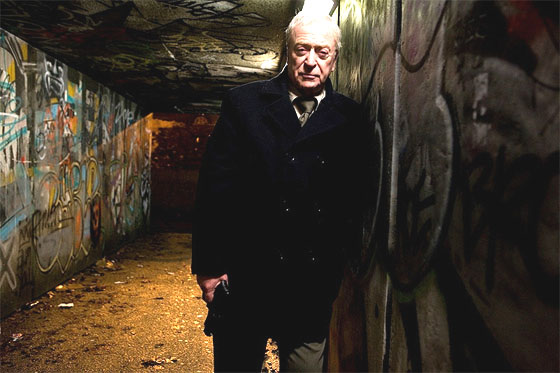
 The GENRE that my group have chosen to focus on for our video is Crime and Thriller. This means that our clip will have to be dark and shadowy, have low key lighting, have POV shots,  have fast and creepy music and mainly create a sense of fear or at least tension. Some films which are the same type of genre as to what we will be filming are: Kidulthood, Taken, Harry Brown, Ill Manors, Adulthood etc.
Adulthood


I must say Taken must be my favourite film i've seen lately. Because it is crime it's really enjoyable for me to watch and fits perfectly with what out idea for our sequence is. Showing to sides of action but the violence and suspision in this film make it even more related.


g

Another film which I liked and remember watching with mum when I was very young is Pretty Woman. It is a Romance film and does not suit my preferences when it comes to film but I must say the movie did touch me. Editing is just not recognisable. As you watch this film it just flows soo well that you do not realise the editing is there.

Monday, 11 February 2013

11/02/13

As we got back to school we found out that the previous Saturday there was a bulglary at our school and to our surprise the Media dep. got robbed of Mac's, camerac, tripods and some other stuff.. Why? We don't know.. Someone needed money but that someone was selfish enaugh to commit a crime like this and make it really hard for us to do any work in Media. We just got to wait for new equipment. Let's hope it comes quick!

Thursday, 10 January 2013

Narrative

Very briefly, NARRATIVE is the way the stories are told- how the meaning is constructed to achieve audience understanding. This then makes the film successful. Tzvetan TODOROV discovered that folk tales and fairy stories all followed a similar structural pattern. This is known as the Classic Narrative Pattern. The Classic Narrative Pattern consists of 5 steps in the Narrative and these are:
  • EQUILIBRIUM [means that everything in the story is in order, is 'normal' and everyone is happy]
  • DISRUPTION [a disruption to the Equilibrium by the means of an event, an action, or a character]
  • RESOLUTION [there is also a recognition to the disruption, and this is followed by an attempt to resolve or repair to the disruption]
  • RESTORED ORDER [once restored order is achieved everything is back to 'normal' therefore we achieve a New Equilibrium]
  • NEW EQUILIBRIUM  [now the problem is solved and the New Equilibrium is achieved until a new, different disrupition takes place]
  •  
 Classic Narrative Pattern
     
A very good example of this can be viewed in the video below...

http://www.youtube.com/watch?v=Z8VoTI7qtk8

In this video we see the Equilibrium through the man. He is walking as if nothing is wrong with nothing to worry about, but as the audience we see more than the actor in the video because we are introduced to the woman standing at the top of the building before the man is. Through this, as audience, we know that a Disruption is to unfold because A) she is standind at the top os the building (which is not normal)... B) she throws the shoe down to get the man's attention. As soon as the man sees the shoe, he looks up and immedietly reacts and runs to the woman. The Resolution at this point is when he tries to get her not to "jump" off the building and when he takes her to the cafe. There everything seems very 'normal', they look happy and everything is as it should be. But yet again things get out of hand once she starts to get too close to him. This is seen as another disruption as she begins to follow him and won't leave him alone. The Restored Order for the man comes when he finally gets her to leave him alone and for her when she runs back past the cafe, and up the stairs and finds herself at the top of the building. There she tries to "jump" off again, at least that is what we're made to think, until we see her throwing the shoe down again... This is a New Equilibrium for her as she clearly is trying to get closer to a man. This video shows a continuity in the Classic Narrative Patern suggested by TODOROV.


I have chosen a scene which links to the genre of the opening sequence of a movie me and my group are going to be making. This scene comes from a film called 'Ill Manors',

Vladimir Propp however, proposed that there are distinctive character types and actions that happen.. This was developed by Claude Levi-Strauss, he took it a stage further and looked closer at structures of stories. How can meaning derive from narratie structure not by looking at connected series of actions in a story but by looking for connections between story elements. He said that the meaning must be what it's not.. the opposite. Like a parallel, a binary opposite, a situation with two possible outcomes, for example:
a hero   --> usually a villain
rich      --> poor
fear      --> happiness
danger --> safety
love     --> hatred
 In a film this could be:
police  --> outlaws     e.g. 'Ill Manors'
peace  --> fighting     e.g. 'The Pianist'

A film Narrative is here so that we, as audience, approach the film with certain expectations. For example we expect the opening of a film to give us background information so that we are not thrown into the movie without knowing anything. This background information would be to do with the characters and setting, so who it's about or who's in it, what it might be about or what it might lead to and where it is set. We can establish what might happen later on through this information.


Wednesday, 12 December 2012

Evaluation of 'Feed the Fish'

What went well in our pleminary sequence was the different types of shots and varied angles that we used. An example of this is when I was filmed from the top of a bench using a high angle shot. This was to make me look powerful although it was argued to be better if the shot was taken from the bottom as a low angle shot. We used this high angle shot on me because we thought it would be an interesting way to show that my character was powerful. It was different to the usual low angle shot and created an unusual effect and made the shot interesting.
The lighting on my face was appropriate to the action in the sequence, no bright light or a dark shadow was present, as I was a mysterious character. Another good aspect of our pleminary sequence was the over the shoulder shot. This shot established the power relations between me and the person opposite. Also what I thought that went well was when we shot the person walking up the stairs. It fitted quite well together and the camera movement was good. Altough I thought this was good I also think that the dissolve should not have been included as it ruined the whole effect of the shots put together.
I think that we should have taken more care with the shot where the person walks in to the room and then the shot filmed from the other side. Here you can clearly see that the door does not play well in the shot. Where we are filming him walking into the room, the door there has nearly shut. Then when we jump to the other side you can see that the angle that the door is at is much bigger. This happened due to the shortage lack of taking care with every little detail.
Next time I think we should think about the place that we filmed the sequence in. The echo didn't turn out to be good and it didn't go well once it was all edited. 
Lastly, I think that we should have used music in this sequence. This would have a special effect on the audience as it would draw them into watching the sequence and not make them think about the editing.
Overall I would have changed a couple of things in this sequence but I do think that the idea behind it was good and that the varied types of shots we experimented with made it interesting to watch.

Wednesday, 17 October 2012

Film Industry 17/10/12

Film industry


Role of the DISTRIBUTOR

Production -> Distribution
                      - fast moving, strategic, competitive
                      - Hollywood Studios, Sony, Warner Bros
                      - Distributors look for films; good films for the right type of audience- film festivals
                      - They need elements that will attract the audience
                      - USP - 'the hook' of the film, unique selling point = one line to describe the movie
Genre -  what type of film the movie is, must be obvious from trailer or advertisement otherwise it is a crap movie.. Target audience usually between 15-24, family groups > core audience.

Developing a campaign appropriate for the audience. The role of the distributor is to bring films to the market place by; coming up with a good way to advertise and give the public a good insight into the genre of the film.

Friday, 12 October 2012

Lee Van Cleef Bit - 12/10/12 classwork

Lee Van Cleef


  1. Why CU ECU wides?
  2. Why delay what we can see?
  3. Focus on objets?
- Wide hot ~ not establishing shot's usual place
- Focus on stones / guns / hands / eyes / face expressions
- Inter- cutting one P.O.V. wide to another


Framing can be about revealing as well as concealing. 

Revealing - suspense tension, character, storyline knowledge, satisfy curiosity, relieve tension, emotion + facial expression. 

WHY? Stone, eyes, face, guns? - important items
Getting audience to ask Qs = Enigma (they'll keep watichng if you use Enigma
Guns and hand delay what's about to happen between the characters- builds tension. 

POV shots
Identifying with the characters. Interracting and linking with them. To feel how the characters are feeling.

Pan shot - emphasises speed

Track shot - keeps  up with the speed. We can also focus on the characters in the car. It has a still effect.  (Bullit car chase)